

HSE University Launches Development of Domestic 6G Communication Technologies Based on Sub-Terahertz Microelectronics

HSE University has launched a large-scale research and engineering initiative to develop domestic technologies for next-generation 6G communication systems. The project is being carried out by the team of the Strategic Technological Project 'Trusted 6G Communication Systems Technology Suite' implemented under the Priority 2030 programme.
One of the project’s key priorities is to develop the sub-terahertz frequency range above 100 GHz, which is considered essential for building next-generation high-speed wireless networks. In the past, this spectrum was rarely used in practical communication systems due to technological limitations. Today, however, it is becoming critically important for 6G development, offering ultra-high bandwidth and minimal signal delays.
The International Telecommunication Union (ITU) predicts that point-to-point implementation of sixth-generation wireless sub-terahertz technologies will begin worldwide in the coming years. In this context, developing a domestic scientific and technological base is becoming a key strategic priority, and HSE University aims to make a significant contribution to this field.
The research focuses on several cutting-edge areas. The first involves developing elements of an intelligent radio environment that can adapt to surrounding conditions and control signal propagation characteristics. The second focuses on creating wireless transceiver modules that support spectrally efficient modulation schemes and electronic beam scanning. The third area is the design of analogue neuromorphic computing circuits capable of local signal processing at high speed and with low power consumption.
The work is being carried out through close collaboration between the university’s scientists and engineers, bringing together expertise in physics, radio engineering, microelectronics, and neurotechnology. Successful implementation of these tasks will not only lay the foundation for developing domestic 6G systems but also ensure Russia's technological sovereignty in one of the most promising fields of modern science and technology.
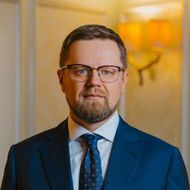
Evgeny Koucheryavy
'Today, as never before, it is essential to rely on our own strengths and scientific tradition—not just to catch up with, but to surpass global technological trends,' says Prof. Evgeny Koucheryavy, Director of the HSE Telecommunications Research Institute. 'We are laying the foundation for Russia's sovereign telecommunications infrastructure. This is not only a scientific challenge but also a matter of national security and technological independence.'
The Strategic Technological Project 'Trusted 6G Communication Systems Technology Suite' is implemented as part of HSE University's Development Programme for 2025–2036, which won the Priority 2030 strategic academic leadership competition within the framework of the National Project 'Youth and Children.'
See also:

When a Virus Steps on a Mine: Ancient Mechanism of Infected Cell Self-Destruction Discovered
When a virus enters a cell, it disrupts the cell’s normal functions. It was previously believed that the cell's protective response to the virus triggered cellular self-destruction. However, a study involving bioinformatics researchers at HSE University has revealed a different mechanism: the cell does not react to the virus itself but to its own transcripts, which become abnormally long. The study has been published in Nature.
Researchers Identify Link between Bilingualism and Cognitive Efficiency
An international team of researchers, including scholars from HSE University, has discovered that knowledge of a foreign language can improve memory performance and increase automaticity when solving complex tasks. The higher a person’s language proficiency, the stronger the effect. The results have been published in the journal Brain and Cognition.
Lost Signal: How Solar Activity Silenced Earth's Radiation
Researchers from HSE University and the Space Research Institute of the Russian Academy of Sciences analysed seven years of data from the ERG (Arase) satellite and, for the first time, provided a detailed description of a new type of radio emission from near-Earth space—the hectometric continuum, first discovered in 2017. The researchers found that this radiation appears a few hours after sunset and disappears one to three hours after sunrise. It was most frequently observed during the summer months and less often in spring and autumn. However, by mid-2022, when the Sun entered a phase of increased activity, the radiation had completely vanished—though the scientists believe the signal may reappear in the future. The study has been published in the Journal of Geophysical Research: Space Physics.
‘Engagement in the Scientific Process’: HSE Launches Master’s Programme in Neurobiology
The HSE University Academic Council has elected to launch a new Master's programme in Neurobiology for students majoring in Biology. Students of the programme will have access to unique equipment and research groups, providing them with the knowledge and experience to pursue careers in science, medicine and pharmacy, IT and neurotechnology, and education and HR services.
Banking Crises Drive Biodiversity Loss
Economists from HSE University, MGIMO University, and Bocconi University have found that financial crises have a significant negative impact on biodiversity and the environment. This relationship appears to be bi-directional: as global biodiversity declines, the likelihood of new crises increases. The study examines the status of populations encompassing thousands of species worldwide over the past 50 years. The article has been published in Economics Letters, an international journal.
Scientists Discover That the Brain Responds to Others’ Actions as if They Were Its Own
When we watch someone move their finger, our brain doesn’t remain passive. Research conducted by scientists from HSE University and Lausanne University Hospital shows that observing movement activates the motor cortex as if we were performing the action ourselves—while simultaneously ‘silencing’ unnecessary muscles. The findings were published in Scientific Reports.
Russian Scientists Investigate Age-Related Differences in Brain Damage Volume Following Childhood Stroke
A team of Russian scientists and clinicians, including Sofya Kulikova from HSE University in Perm, compared the extent and characteristics of brain damage in children who experienced a stroke either within the first four weeks of life or before the age of two. The researchers found that the younger the child, the more extensive the brain damage—particularly in the frontal and parietal lobes, which are responsible for movement, language, and thinking. The study, published in Neuroscience and Behavioral Physiology, provides insights into how age can influence the nature and extent of brain lesions and lays the groundwork for developing personalised rehabilitation programmes for children who experience a stroke early in life.
Scientists Test Asymmetry Between Matter and Antimatter
An international team, including scientists from HSE University, has collected and analysed data from dozens of experiments on charm mixing—the process in which an unstable charm meson oscillates between its particle and antiparticle states. These oscillations were observed only four times per thousand decays, fully consistent with the predictions of the Standard Model. This indicates that no signs of new physics have yet been detected in these processes, and if unknown particles do exist, they are likely too heavy to be observed with current equipment. The paper has been published in Physical Review D.
Institute for Robotics Systems Established at HSE University
As decided by the HSE University Academic Council, a new Institute for Robotics Systems will be established at HSE, and with a strong fundamental base. It will cooperate with relevant departments across the university and engage students and doctoral candidates in research and development (R&D). First Vice Rector of HSE University and Director of the Institute for Statistical Studies and Economics of Knowledge, Leonid Gokhberg, discussed the expected practical results and the framework for cooperation with an industrial partner.
HSE Seeks New Ideas for AI Agents: Initiative Competition Launched
HSE University is inviting researchers and lecturers to present concepts for new digital products based on artificial intelligence. The best projects will receive expert and technological support. Applications are open until December 19, 2025.